
From Japan to Cyprus roads, fully managed.
Why low mileage on cars
Low mileage is the first thing we look for at auction, and for good reason. A car that has barely been driven has barely begun to wear, which is exactly what makes a Japanese import such a strong buy. Here is why the numbers matter, and how we make sure they are real.
Why do Japanese cars have such low mileage?
Japan's roadworthiness system pushes owners to sell early. The Shaken inspection falls due at year three, then every two years, and its cost climbs steeply as a car ages. Combined with genuinely low average annual mileage in dense, transit-heavy cities, this means many Japanese cars reach the auction young and lightly used. We source vehicles under 30,000 km precisely because that supply genuinely exists.
Most Cypriot buyers assume ultra-low-mileage cars are rare or overpriced. In Japan they are ordinary, because the ownership culture and the tax system both reward changing cars often.
Japanese drivers also rely heavily on trains and dense urban transit, so a car that is several years old can still show mileage a European driver would rack up in a fraction of the time. That is the pool we bid in.
What is the Shaken inspection and why does it matter?
Shaken is Japan's compulsory roadworthiness inspection. A new car's first Shaken is due at three years, and it then repeats every two years for the vehicle's life. The bill rises as a car gets older, so many owners sell just before an expensive round comes due. This is the structural reason so many young, low-mileage Japanese cars are sent to auction rather than kept.
For a buyer in Cyprus, Shaken is good news. It quietly filters the best cars out of Japan and onto the export market before they have aged.
We treat the Shaken cycle as a signal. A car sold near a three- or five-year mark is often a well-kept vehicle whose owner simply did not want to pay for another inspection.
How do you check the mileage is genuine?
Every car we bid on carries an independent auction inspection sheet. Japanese auction houses grade vehicles on a published scale, from S and 6 for near-new cars down to R and RA for accident-repaired ones, and the inspector records the odometer alongside any faults. We cross-check that grade and the recorded mileage against the maintenance history before we place a single bid.
The inspection sheet is the backbone of the Japanese auction system, and it is written by an assessor who has no stake in the sale. That independence is what makes the mileage trustworthy.
Verifying the inspection report is one of the four checks in our vetting, alongside condition and maintenance history, safety-recall status, and confirming the winning bid stays within your agreed budget.
What does buying under 30,000 km save you?
A car under 30,000 km has years of trouble-free driving still ahead. Major service items such as timing components, suspension bushes and clutches typically wear at much higher mileages, so early ownership is largely routine oil changes. The cabin, paint and mechanicals are all near factory condition, which means fewer surprises, lower running costs and stronger resale value when you eventually sell.
Every kilometre puts strain on the engine, gearbox, suspension and brakes. As an illustration, buying at 25,000 km instead of 120,000 km means owning the car's easiest years rather than its most expensive ones.
The interior tells the same story. High-touch surfaces on a genuinely low-mileage car still feel fresh, and the exterior has had far less exposure to stone chips, dings and sun.
Is a low-mileage Japanese import better than a local used car?
Often, yes. A comparable local used car has usually spent its whole life on Cyprus roads and in Cyprus heat, frequently with higher mileage and thinner documentation. A Japanese import of the same age typically shows lower mileage, carries an independent auction grade, and arrives inspected. We land it after roughly 2.5 months at sea and a five-day arrival inspection before handover.
The comparison is not just about the odometer. It is about how the car was used, how it was inspected, and what paperwork follows it.
We import each car end to end, from the auction floor to Limassol port and Cyprus registration, so the low mileage you pay for is the low mileage you actually get. If you want to see current stock, message us on WhatsApp.
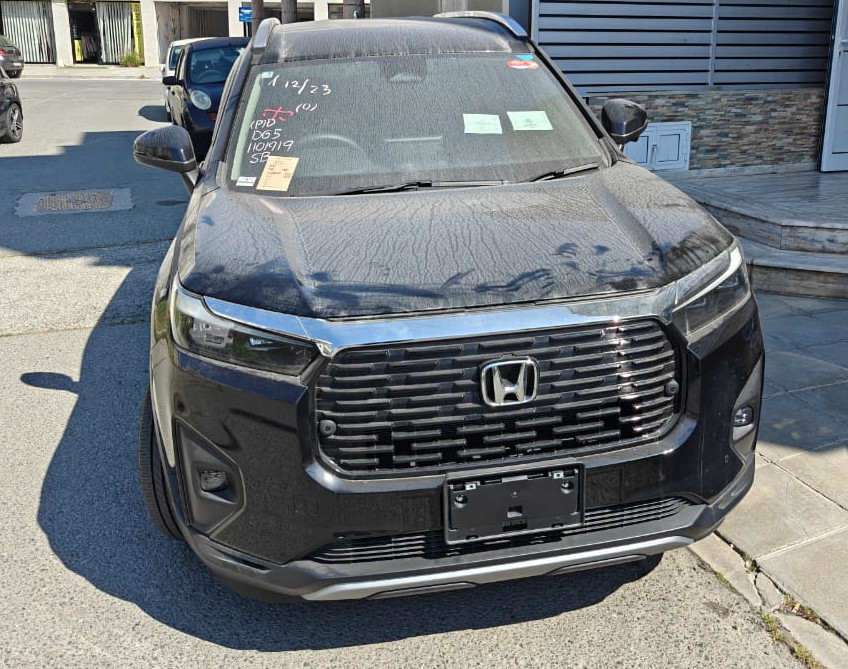
Car Arrives in Cyprus